

featuring Dan Yemin | words by Stepan Soroka
Paint It Black has been active since 2002, and frontman Dan Yemin’s involvement in the independent music scene predates the band by over a decade, most notably as the guitarist in Lifetime and Kid Dynamite. Paint It Black’s style of hardcore channels a primal aggression that, when coupled with Yemin’s literary eloquence, creates a biting sonic package that slices to the core of society’s hypocrisies. The band has allowed Yemin to trace an unusual trajectory for a musician, his output becoming only more vicious with age, and his outrage only more crystallized and genuine.
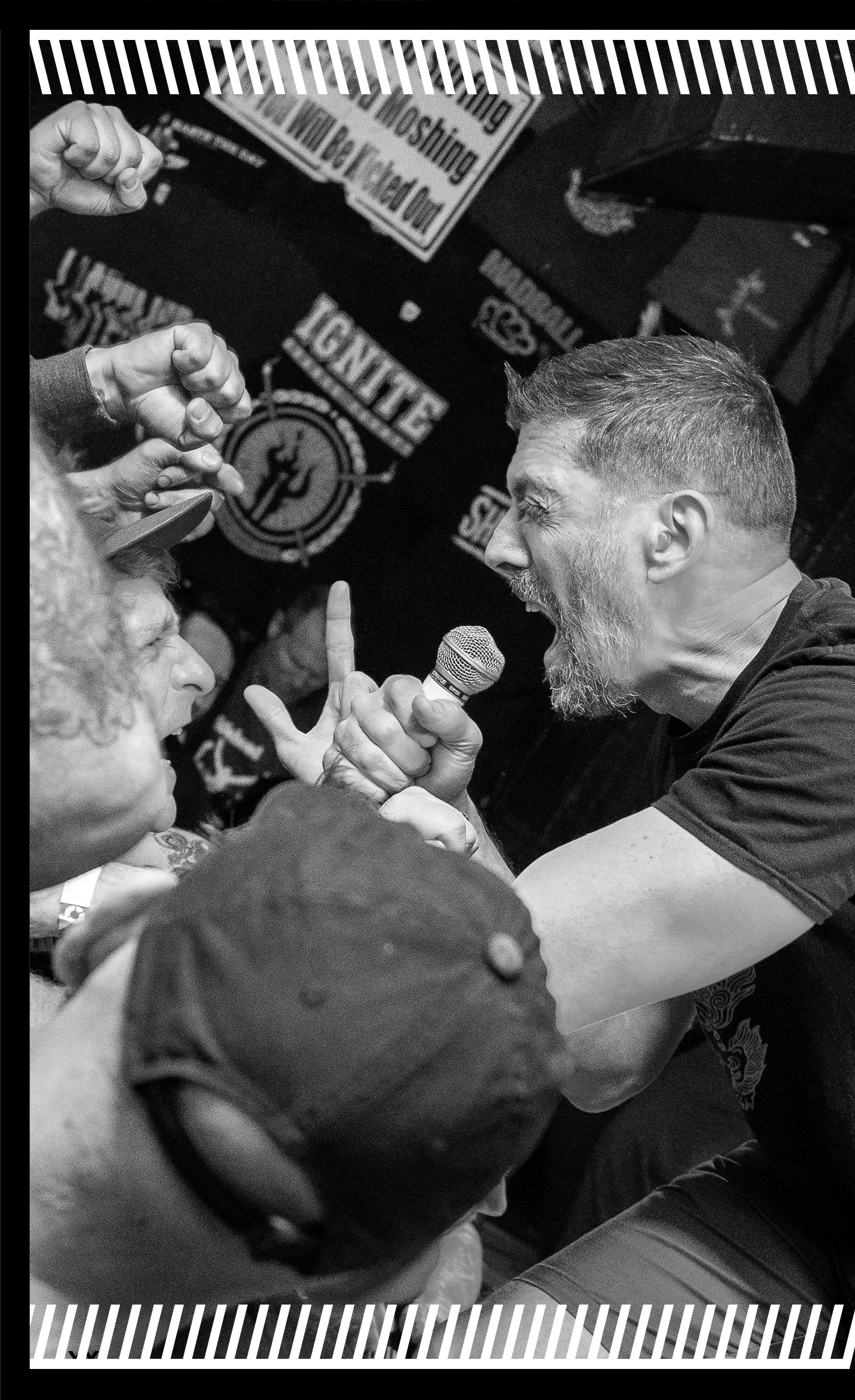
You’ve been making music for multiple decades. After all these years, do you ever find yourself having to reach deeper inside of yourself to find inspiration to write, especially considering the anger that is foundational to Paint it Black’s musical style?
I almost wish I could say yes, but the anger is pretty close to the surface. I’m not an angry person in terms of how I walk around and engage with other people, but I pay close attention to current events and their historical context, and it’s really not hard to access anger. I wouldn’t say it is just anger, either. I wouldn’t want to oversimplify it. There are a lot of more nuanced and complicated emotions as well. There is desperation, heartbreak, joy, surprise, wonder, and mystery. I would say, over time, if there is anything I’ve had to dig deeper to find, it’s hope. I don’t want to be a bummer, but I do want to be honest. That is what I find myself digging deeper for these days.
You have referred, in other interviews, to music as a form of activism. I have tremendous respect for the sociopolitical analysis you present in your songs. In your opinion, what are the elements that make an effective protest song?
First and foremost, you have to mean it and not be miming it. I think I’m actually ambivalent about presenting music as a form of activism. It’s my hope that it is a useful contribution to activism, but I don’t think it takes the place of more direct engagement. I do know that, from hearing people’s stories over the years who have connected with us, the music has inspired a lot of people to activism, and that is really gratifying to hear. I’m always wondering whether it is enough, in terms of my contribution. I mean, it is what I know how to do, and it is what I can contribute that is unique, but I don’t think it is enough. I think there are probably a lot of ways to create an effective protest song. For me, I think there has to be genuine outrage, but it also has to be informed. Without an understanding of historical context, it can just be “old man yelling at the world.” There has to be some deeper level of analysis, and not just shaking your fist at “The Man” without some exploration of what that is. I think critique is essential. The one thing I have learned over the years, as well, is that if you write really bland, oppositional lyrics, they could be misinterpreted as representing a political ideology that is not yours. I would hate it if some MAGA-hat wearing motherfucker misinterpreted our lyrics as speaking to their concerns.
I feel like we have seen that happen in recent years with bands like Rage Against the Machine. You see their music pop up in some weird places.
Yeah, but they weren’t short on analysis. I think Zack wrote great lyrics at all stages of his musical career, but a lot of nu-metal bros didn’t look past the chorus. If you just yell “Fuck you, I won’t do what you tell me”, you could be coming from any place politically and think that that is your rallying cry. It’s not Zack’s fault that people didn’t read the rest of the words.
I try to remember that it is not necessarily my responsibility to not be misunderstood. But, to some degree, I do take responsibility for it. I’m oversensitive about being misunderstood. I hope that is a useful answer.
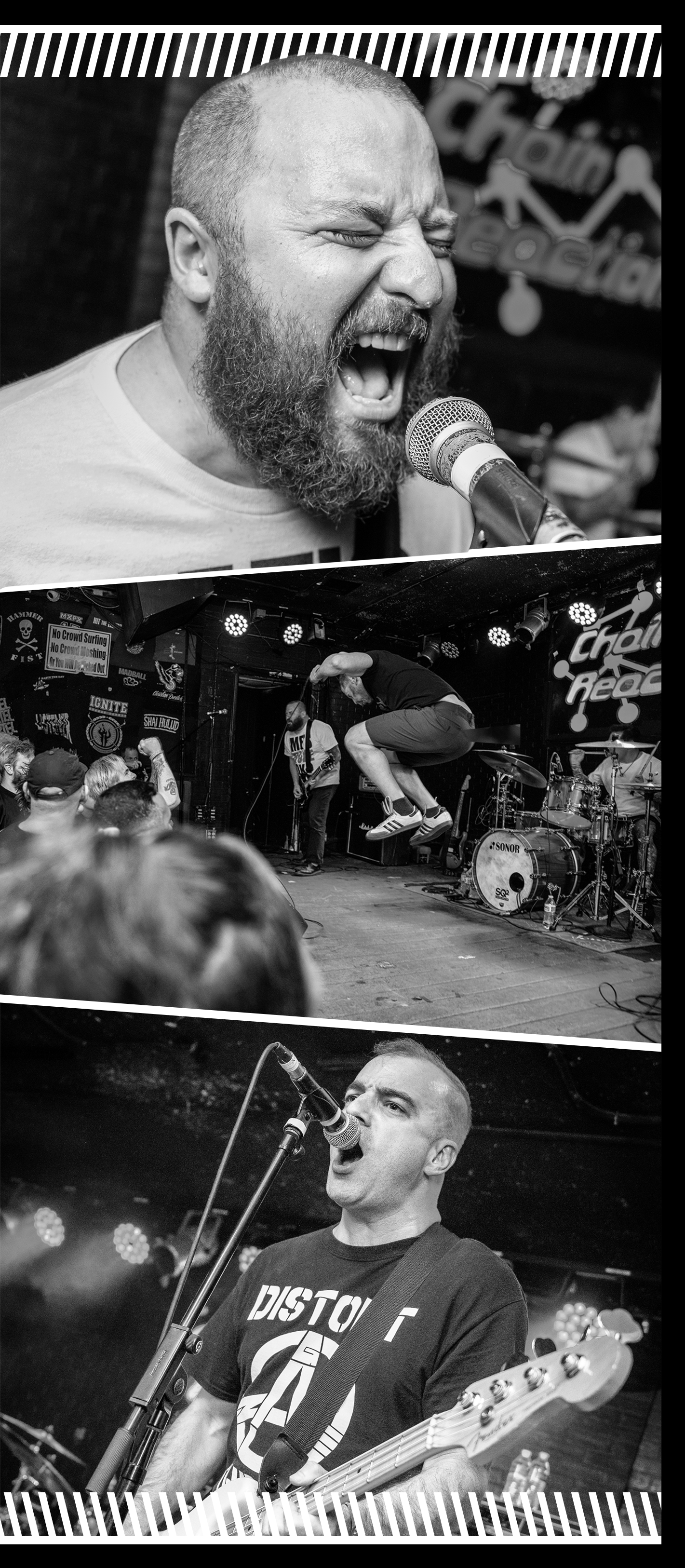
Can you speak to the ways in which you see contemporary hardcore staying true to the genre’s origins? And in what ways would you say modern hardcore is different from the music you grew up listening to and participating in?
It depends on what we mean by “modern hardcore.” Those words can mean different things to different people who are coming at it from different perspectives and experiences. As an example, I can remember a few years back when people were getting really sentimental about 90’s hardcore. That’s a period of time when I was fully submerged in HC, touring, going to shows several nights a week, and spending all my money on records. I thought we were talking about Los Crudos, His Hero is Gone, Swing Kids, Life’s Halt and stuff like that, but it turned out that some of the people I was having these conversations with were referring to the music that was coming out on Victory Records, which to be honest I was barely paying attention to at the time. Almost two different worlds.
There’s a ton of new hardcore punk coming out constantly and I’m mostly drawn to the more primitive, less professional, end of the spectrum. The more it musically references bands like Negative Approach, Crucifix, or Side By Side, and the less it sounds like Slayer, the more exciting it is to me. But that’s just a matter of taste. Hardcore can be a lot of things to a lot of people. It’s cool that there are all these huge festivals celebrating hardcore. That’s really exciting to me. And it’s clear that hardcore is having a moment right now, but the most interesting and thrilling shit is definitely still what’s happening in basements and VFW halls. I’m most excited by bands that either sound like some lost demo from 1983 or bands who tap into a diverse range of influences from outside of traditional hardcore and punk.
Paint it Black’s output has been sporadic over the band’s recent history, with a 10-year gap between 2023’s Famine and your previous release. Have you ever worried that the band would lose relevancy with its audience?
Nah. You can’t get preoccupied with stuff like that. It takes a long time between records because our lives are complicated and there is a lot going on. I live in Philadelphia and the other three members of Paint It Black all live in Los Angeles. Our drummer is a session musician who is on tour with various bands probably eighty percent of the year. Other bands and other projects move to the forefront. For a long time everyone in Open City was here, so that was more present, but the newer Paint It Black stuff was always in the background, in process. And then Covid happened. That was probably three straight years of disruption when there was no activity at all, except for conversations here and there. I think part of continuing to make music in a way that works for what my life is about involves a very different approach to process than when I was in my 20s. There is probably an album and a half of new Paint It Black stuff written, but I have to be resigned to the fact that it is going to be another two years before we are in the studio. Maybe longer. I used to be so impatient. Well, I don’t think my kids would say that I am patient, but when it comes to musical projects bearing fruit, I really embrace patience. I take forever to demo the songs, because I am really obsessive about it, even though those are just rough sketches. They’re meant to be the frameworks of the songs for the other members to dismantle and reconfigure in whatever way they think makes sense. I stay out of that part of the process, but I put an obsessive amount of detail into the demos. Even when it comes to just programming the drums, I drive myself crazy with getting it right.
I think it’s nice to have something to obsess over.
Well, I probably won’t rehearse with the band for another year and a half, so I kind of have to get into my own head and my own process over here.
Paint It Black’s discography has been released through a wishlist of independent labels – Jade Tree, Bridge Nine, No Idea, Fat, and, most recently, Revelation. Is there a label that you haven’t worked with you would like to?
There is one label that I think is doing really interesting stuff that I would love to do something with at some point, and that’s Convulse. They’re putting out bangers. I think if you want to look at what is coming out in modern hardcore punk that is interesting, inspiring, and challenging, Convulse is a good place to look. I think if we lived in DC the obvious answer would be Discord. I respect the fact that that label is really just about documenting what is going on around DC. I think that purity of vision is pretty cool. Another label that I am kind of obsessed with is Iron Lung out of Seattle. I’m not sure if we fit into their parameters, but I have a lot of respect for that label.
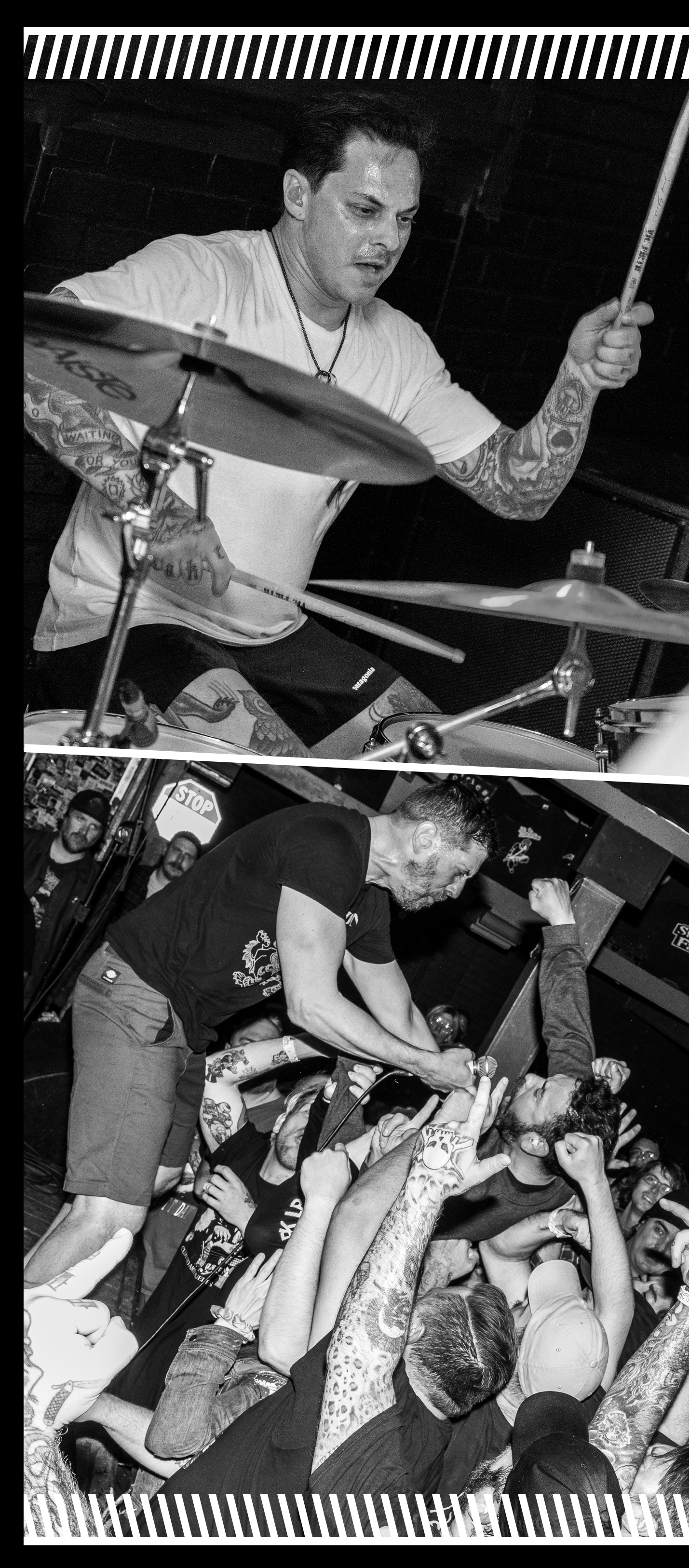
Speaking of No Idea, your band has played The Fest in Gainesville, Florida on several occasions. Can you regale us with a Fest story?
Yeah, about fifteen times. For a long time we played The Fest every year. This might sound self aggrandizing, but I love when things become kind of mythic in retrospect. In the early years of The Fest, there would be a lot of secret side shows. A friend’s band would come up to you after your show and be like “Yo, we’re going to play at this house party south of campus at midnight. You guys should play.” Usually, we’re down for that sort of thing. One year, someone from Shook Ones came up and was like “We’re playing in the kitchen of this townhouse. Are you guys down?” And we were like “Hell yeah. Bet.” You never know what is going to happen with that sort of thing, but we get there and people just spilling out of this place. We get in and Shook Ones is finishing, and they’re like “Just jump on real quick and play your set, because this is going to get shut down.” We start playing and the cops show up, probably during the second song. There are so many people inside. People are jumping off the refrigerator. It’s insane. Then the floor starts to collapse. Some people are sitting down because they don’t want to fall through the floor. Other people are running. The whole thing just blew up, basically. The police are telling us to stop and we won’t stop. Eventually the police start wading through this room full of kids, and we’re like “Let’s get the fuck out of there.” We’re thinking “That was crazy. The floor caved in. The cops were going nuts.”
I think that was Fest 6, and leading up to the next one, people were asking “What are you going to do this year to top that?” At first we said we weren’t going to do anything. Then we started talking about it and asking “What could we do that could be more crazy?” I don’t know what happened to the kids that lived in that townhouse, but their kitchen floor caved in, you know? There was all of this pressure to do something cool and find some other outside, secret show. And, you know, we don’t live in Gainesville. We can’t orchestrate that. All we can do is hope that somebody asks us to do something cool and say “Yes.” Then we had this idea to rent a U-Haul truck. We asked the people we knew in town to see if they could get a backline together. We also don’t want to do anything that puts The Fest’s standing with the city at risk. But we basically orchestrated this thing, with a lot of help, where we had gear, a rented U-Haul, and a generator. There was a big show at the Florida Theatre, which is like a 1,000 capacity venue, and we planned to do this at the parking lot across the street. The Bouncing Souls were headlining at the Theatre. It was Saturday night, and this was probably the biggest show of the Fest. We made all of these crush notes with sharpie that said “Dear Fest, we think you’re really special, and we have something special we want to share with you. Meet us across the street after the show.” We made like 800 copies and passed them out among the crowd while the Bouncing Souls were playing. The rest of the guys went to set up and I just watched the Souls play from the side stage. I was thinking that it could be a massive failure or it could be awesome. The band was texting me being like “Yemin, where the fuck are you?” They’re ready to go. I get out there and this entire parking lot is full of kids. We’re like “Oh. This is going to attract a lot of attention.” We start playing, and I think after one and a half songs somebody stage dives off the generator and the power goes out. We kept playing with just drums. The microphone was out, but the whole crowd was yelling the songs along with us. Just drums, me, and hundreds of people yelling. The Gainesville police force shows up on horseback and starts riding horses into this crowd. People start chanting “Cops on horses! Cops on horses!” We just had to run. It was one of those things that I think became kind of mythic. A lot of people ripped it off afterwards. I’m not trying to throw shade or act like we invented the idea of a secret show, but we definitely saw a lot of people do something similar in the years following. Not in Gainesville, but in other places. Nobody would have the guts to try that again in Gainesville. It was not low key at all. We had this idea that, if we were in a U-Haul, we could make a quick getaway. But not when there are a thousand kids surrounding you. None of us got arrested. That’s my Fest story.
On a more personal note, a bunch of times we played before Dillinger Four, and they are probably my favorite American punk band. They’re old friends, and that has always been special, playing with them in Gainesville.
Growing up, did you experience any overlap between the hardcore scene and the skate scene?
Yeah, totally. They were synonymous when I was growing up. I can’t skate. I’m not coordinated. My friends would be skating and I’d be riding my bike alongside them. I’m good at falling off a skateboard. Growing up, hardcore punk was the official soundtrack of skateboarding. Like, that’s it. End of story. There was a lot of overlap between skaters and people making it happen in the punk scene. It was also pretty fresh. When I went to my first show, it was only a year after Minor Threat had broken up. Hardcore was new and skating was new and neither of them had had a chance to branch out into other domains.
After twenty plus years of playing in Paint It Black, are there any particular achievements or milestones that you feel are left to accomplish with the band?
Just the next record. It’s always the next record.
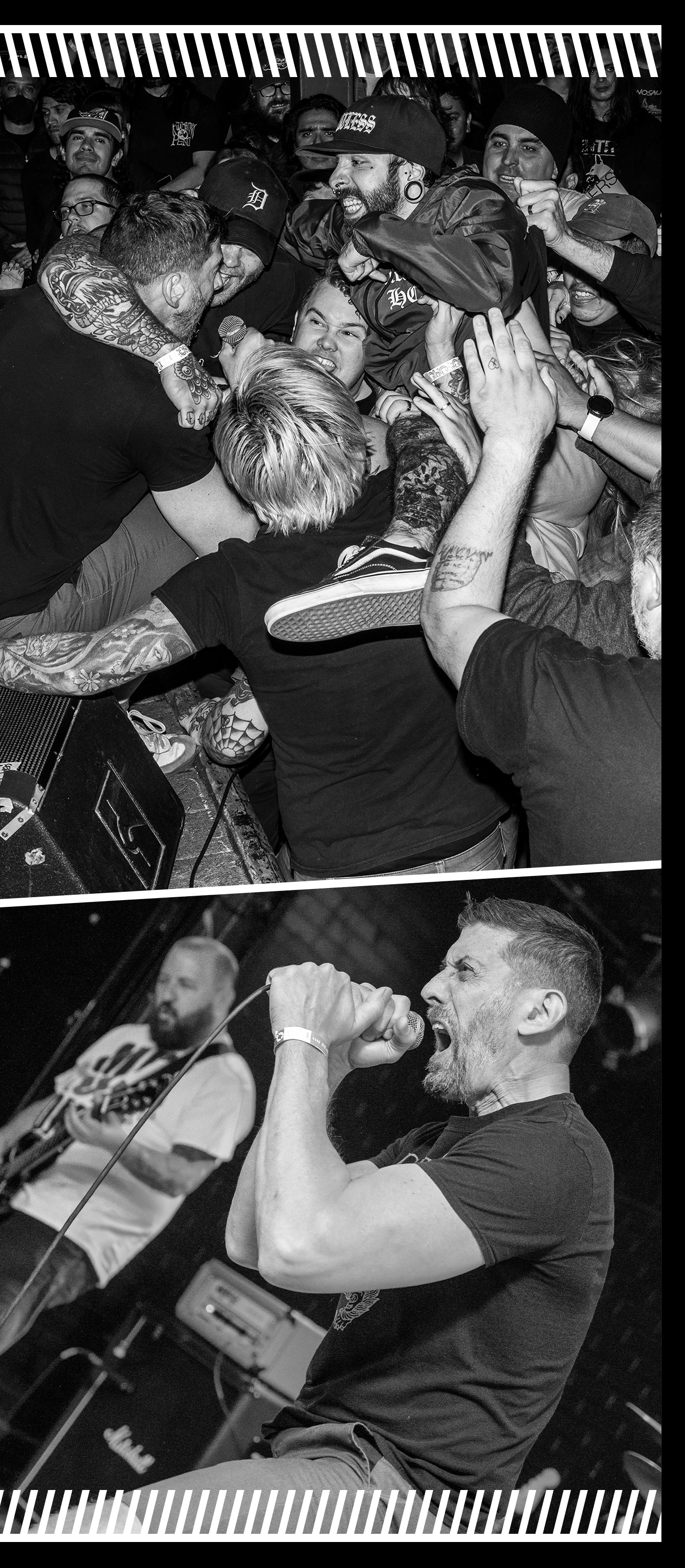
What is a feeling that you hope an audience member goes home with after seeing Paint It Black perform?
I want them to feel energized, and that when they are feeling alienated and at odds with the world, there is a place where they belong and where people speak their language. I hope that people feel some of the excitement that we feel when we are making the music. I get just as excited now – I’m the opposite of jaded. As you get older, cynicism becomes tempting, but I also think that cynicism is pretty fucking sinful and cowardly. I feel just as inspired when we are making music now as I did 25 years ago. I feel just as excited about bringing a new record from our brains onto vinyl. That process is still one of the most thrilling experiences. And I still get just as excited about every show as I did when I was in grad school, and Lifetime would hit the road after class on a Friday to go play a show 500 miles away.
Is there anything we haven’t brought up in the interview so far that you would like to discuss?
I don’t know man. I’m not at my sharpest this late at night. I will say this: we live in a neighborhood where there are a lot of families with kids, but it is also a few blocks from Drexel University and the University of Pennsylvania. There are a lot of students living in our neighborhood as well. It just so happens that this year, two doors down, there is a house full of DIY music kids that put on shows. They’re having a show right now, and it’s just rad to see people still making their own culture and spaces for art, without relying on being endorsed by business, acceptability, or profitability. “There needs to be a place for the bands that we want to see to play, and we are just doing it.” That is just as cool now as it was in New Brunswick in 1995, or West Philly or Fishtown in 2005. It’s just rad. Like, I have no idea what kind of music they are playing tonight. I can hear the drums.
I know one of my kids is going to wake up any moment now and be like “Dad! Make them stop!”I love that it is happening right next door. I’m amazed that no one has called the cops yet on those kids. But they’re nice. They’re good neighbors. They’re friendly, polite, and chill, and they’re making cool shit happen in their basement. That’s essential. I love the fact that there are a million and one hardcore and punk festivals around, but the coolest shit is not happening on those big stages. It’s happening sandwiched between a hot water heater and a furnace in some basement. That’s where you are going to find the stuff that is really inspiring and inventive.
On that topic, can you tell me about the most memorable basement show you have ever played or seen?
The most memorable basement show I have ever seen was during the summer of either 1993 or 1994. A band called John Henry West from the Bay Area played in a basement in Westfield, New Jersey. That’s actually the town I grew up in. For a few years there was somebody doing shows in this suburban town like an hour outside of New York City. They would cook vegan food and the bands would sleep over. I saw some of the best shows there. Lifetime definitely played there at least once. John Henry West was this band that was just around for a minute. They put out one seven-inch on Gravity Records. They did one tour and they had broken up by the time their record came out. The guitarist and main songwriter in that band, Sarah Kirsch, was somebody who was in well over a dozen bands in the span of like ten years. They were all short-lived and all kind of followed that pattern of last band breaks up, puts together a new band, records, goes on tour, band breaks up, and by then Kirsch was working on the next band. She was probably my biggest inspiration as a guitar player. John Henry West was one of the earlier bands. They were just explosive. To me, it was like if Swiz and Chain of Strength had a baby. That’s why it hit me live – there was nothing recorded by them yet. I knew who Kirsch was from the last few bands, and I got a call that the show was happening. It was the night before we were leaving for a Lifetime tour. The impact of seeing that band perform carried me through the whole month-long tour. It was my battery. I’m still heavily influenced by the way they put songs together, the way they were on stage… well, not on stage, but on a floor. It was a really raw blend of primitive aggression and melody. It was really visceral and perfect. I don’t even have to think twice. That is definitely the best basement show, and I’ve seen too many to remember. That was the most impactful.
Thank you for Broadcasting Live From the City of the Dead.
Photos: Ray Camacho
Originally published in Issue 8 - October 2026